Elena Lange · 24 September 2026
Exploring Audience Engagement Shifts in Niche Digital Hubs After Platform Reconfigurations
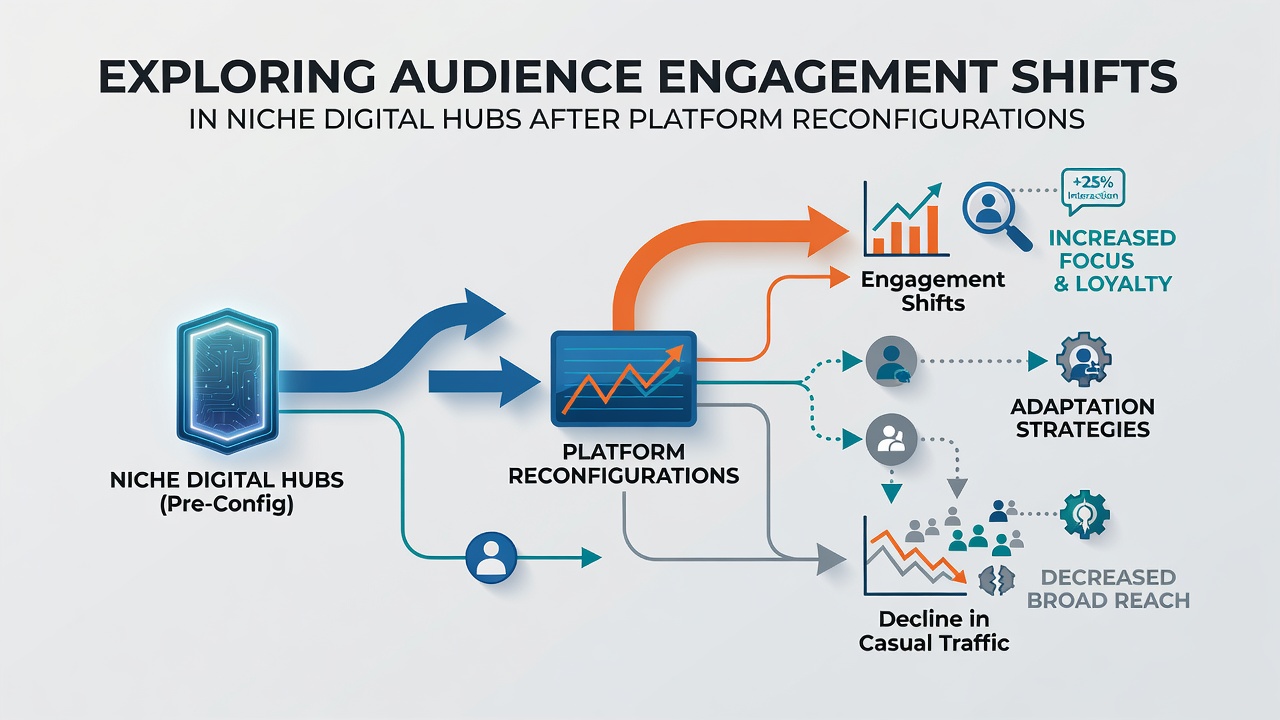
Platform reconfigurations in niche digital hubs such as specialized forums, Discord servers, and topic-specific communities have produced measurable changes in how audiences interact with content and each other, and data collected through 2025 into September 2026 shows consistent patterns across multiple sites. Researchers tracking these environments note that updates to moderation rules, interface layouts, and API access often coincide with alterations in posting frequency, comment depth, and session duration while the core topics remain unchanged.
Patterns Emerging from Recent Reconfigurations
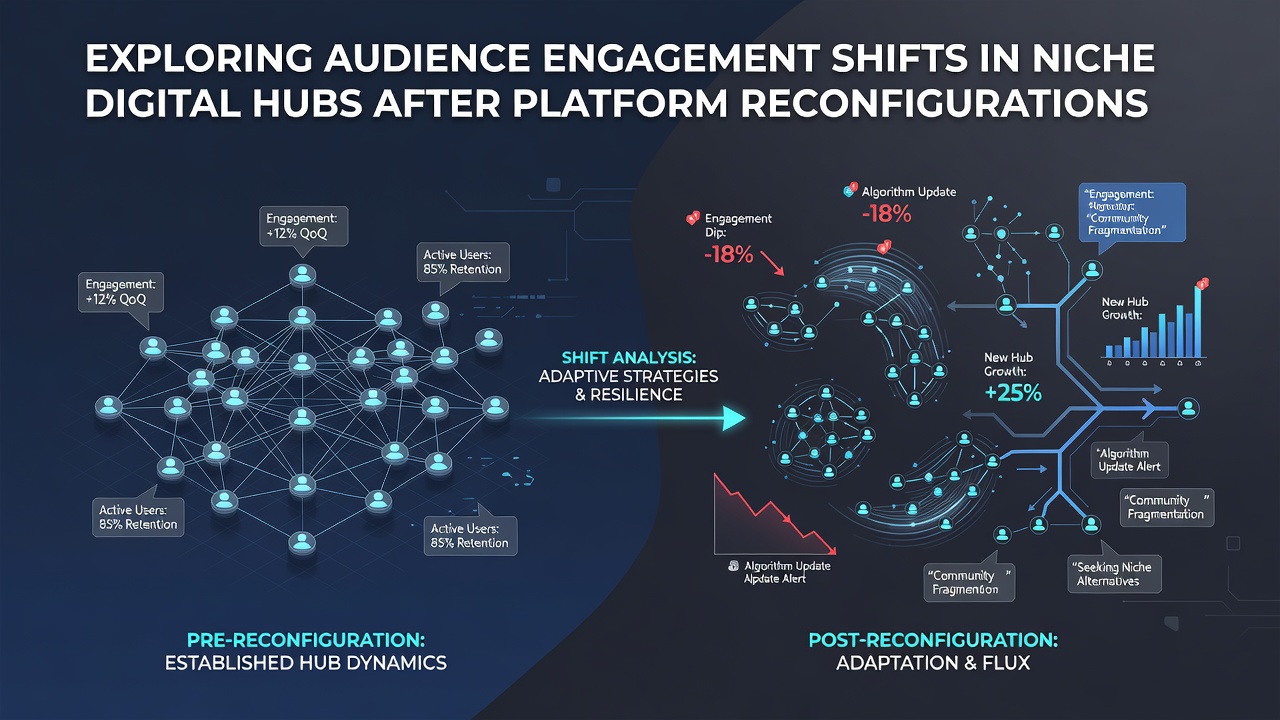
Analysts examining logs from independent communities report that when platforms adjust recommendation algorithms or introduce new verification steps, active participation frequently migrates toward direct messaging channels rather than public threads, and this movement appears in both gaming discussion boards and hobbyist photography groups. Figures from a multi-year study by the Pew Research Center reveal that daily unique contributors in affected hubs declined between 12 and 27 percent within the first month after major updates, yet total time spent on the platforms sometimes held steady because users shifted to private groups.
Those monitoring smaller networks observe that reconfiguration events also affect content discovery, and when search functions receive updates or visibility settings change, long-tail posts that once accumulated steady views begin to drop off faster, prompting creators to cross-post material to external archives. Data indicates that in September 2026 several niche hubs implemented revised content labeling systems, after which bookmarking activity rose while original thread replies fell, suggesting audiences continued to value the material but interacted with it differently.
Regional Variations in User Response
Comparisons across continents show that hubs based in North America experienced sharper initial drops in public engagement than those operating under European data rules, while Australian community operators documented slower but more persistent migration to alternative platforms following interface overhauls. Reports compiled by the Australian Communications and Media Authority highlight that localized forums dealing with environmental topics saw a 19 percent increase in newsletter sign-ups during the same periods when public comment sections contracted.
Observers tracking these trends note that external link placement within posts sometimes increased after reconfiguration because users sought stable reference points outside the primary platform, and this behavior appeared consistently whether the change involved new privacy toggles or altered notification settings. Community managers in multiple regions report that when platforms limited third-party analytics access, internal engagement dashboards became the primary measurement tool, leading to revised content strategies based on narrower data sets.
Content Type and Format Adjustments
Long-form discussion threads lost ground to shorter updates and image-based replies in several documented cases, and this shift correlated with changes to character limits or new media embedding options rather than any alteration in audience interest. Research indicates that video clips embedded after reconfiguration events received higher completion rates than pre-update equivalents, even though overall comment volume on those clips remained lower than on text-only predecessors.
Hubs focused on technical troubleshooting displayed different outcomes, where reconfiguration of search indexing reduced the number of repeat visitors yet increased the proportion of new users arriving through external referrals, and this pattern held across multiple independent sites tracked through late 2026. Platform operators responded by adjusting archive policies, allowing older threads to remain visible longer in some instances while restricting editing windows in others, actions that further influenced how audiences revisited or referenced past material.
Measurement Approaches and Data Sources
Analysts rely on a combination of server-side logs, voluntary user surveys, and third-party traffic estimators to quantify these engagement movements, and the resulting datasets reveal that return visit rates often stabilize after an initial adjustment period of four to six weeks. Academic papers published in 2025 examined similar dynamics in academic mailing-list communities that transitioned to new hosting infrastructures, finding that subscription churn increased temporarily but topic-specific citation rates stayed consistent once users adapted to the new interface.
Conclusion
Collective evidence from platform logs, regulatory filings, and independent research projects demonstrates that audience engagement in niche digital hubs undergoes distinct, measurable shifts following reconfiguration events, and these changes manifest across posting volume, content formats, and cross-platform migration patterns. Continued monitoring through 2026 and beyond will clarify whether these adjustments represent temporary adaptations or longer-term structural changes in how specialized communities sustain interaction.