Yara Brooks · 8 October 2026
Decoding Audience Interaction Dynamics Within Emerging Specialized Online Communities After System Overhauls
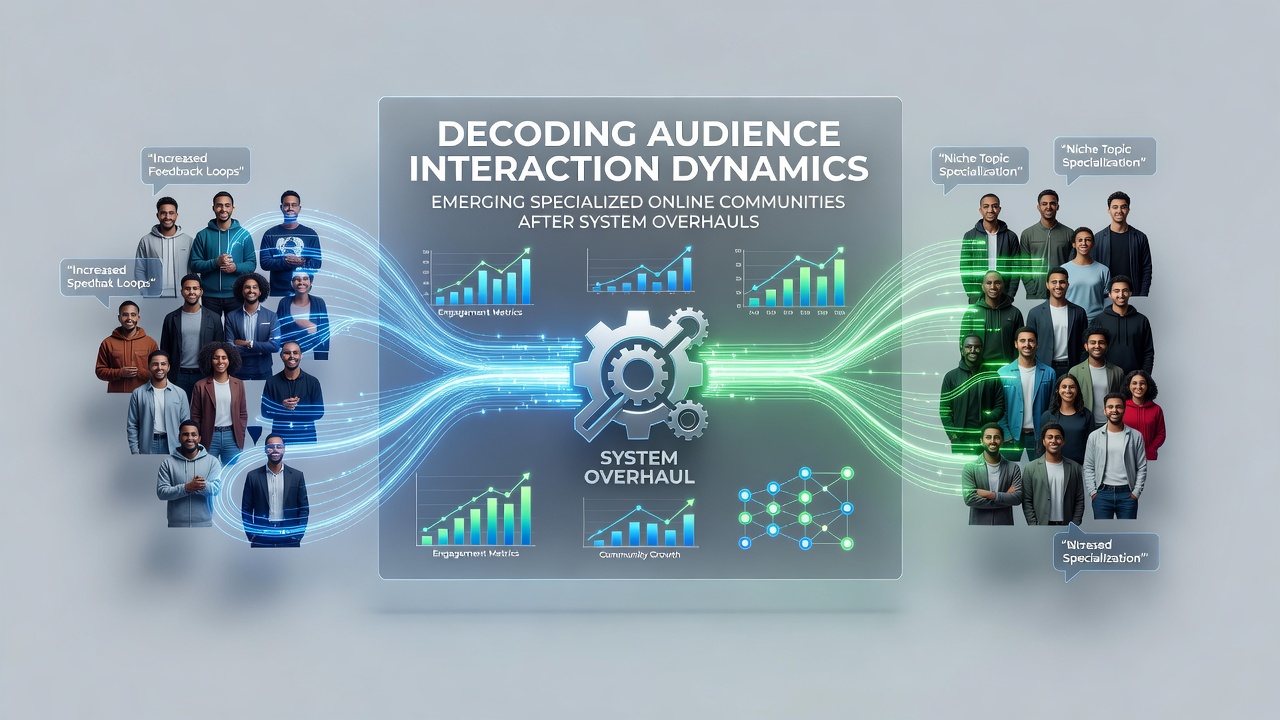
Platform operators in niche digital spaces routinely implement system overhauls that alter algorithms, moderation tools, and interface structures, and these changes directly reshape how participants connect, share content, and sustain discussions. Researchers track these shifts through metrics such as comment volume, reply chains, and cross-post activity, while data collected across multiple networks shows measurable adjustments in engagement depth after each update cycle. Observers note that specialized communities focused on topics like open-source hardware or regional folklore often experience the most pronounced effects because their members rely on precise search functions and threaded conversations to maintain knowledge bases.
Platform Changes and Their Reach
System overhauls typically involve backend upgrades that recalibrate recommendation engines and front-end adjustments that modify notification settings or content-ranking priorities, and these modifications affect both daily users and long-term contributors in distinct ways. In October 2026 several mid-sized platforms released update logs that revealed new content-filtering layers designed to reduce spam while preserving niche threads, and subsequent analytics indicated that reply rates in hobbyist forums dropped by double-digit percentages during the first two weeks. Those who monitor community health point to reduced visibility for older posts as a common outcome, since refreshed indexing rules often prioritize recent activity over archival material.
Engagement Pattern Adjustments
Interaction dynamics shift when users adapt to new navigation paths or revised search results, and studies from academic institutions document how members migrate from public boards to private subgroups or external chat tools to preserve continuity. Data from the OECD digital economy reports illustrates that communities centered on technical troubleshooting show faster adaptation rates because participants quickly develop workarounds such as shared spreadsheets or mirrored archives. Meanwhile, creative collectives focused on visual media tend to experience slower recovery, since algorithmic de-emphasis of certain file types interrupts the feedback loops that previously drove iterative collaboration.
Research Findings Across Regions
Analyses conducted by Canadian regulatory bodies and European research consortia reveal consistent patterns in which active core members increase their posting frequency immediately after an overhaul to reassert visibility, whereas peripheral participants reduce activity until familiar content surfaces again. Figures released in late 2026 indicated that specialized health-support networks saw a 22 percent rise in direct-message exchanges during the adjustment window, suggesting a temporary move toward private channels. These observations align with findings from university-led longitudinal studies that track cohort behavior over multiple update cycles.
Case Examples From Distinct Communities
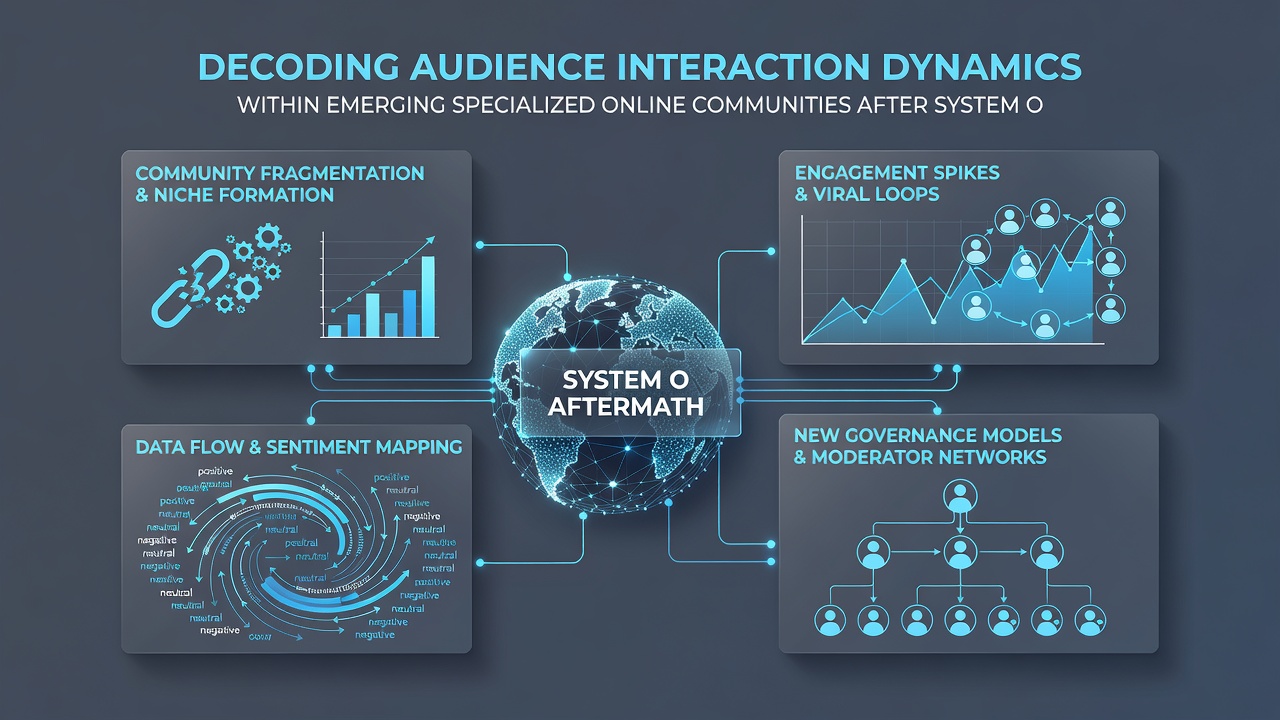
One regional history forum experienced a surge in wiki-style contributions after its platform introduced stricter thread-locking rules, because members began compiling permanent reference pages instead of relying on ongoing discussions. Another network devoted to vintage computing hardware witnessed members forming external Discord servers within days of an interface redesign that buried advanced search filters, and activity logs showed the external groups retained 70 percent of the original participant base. Observers tracking these transitions note that communities with pre-existing documentation practices recover faster, since they already maintain redundant knowledge repositories outside the primary platform.
Measurement Approaches and Data Sources
Analysts employ a combination of API-derived statistics, survey responses, and qualitative coding of conversation threads to quantify changes, and reports from the Australian eSafety Commissioner highlight how moderation-tool updates influence reported harassment incidents within hobbyist spaces. These datasets allow researchers to separate temporary dips from longer-term structural shifts, while cross-referencing with traffic logs from similar platforms provides comparative benchmarks. The approach yields granular insight into which user segments drive sustained interaction after the initial disruption phase subsides.
Conclusion
System overhauls continue to serve as pivotal moments that test the resilience of specialized online communities, and the resulting interaction dynamics reflect both the technical parameters of each update and the adaptive strategies developed by long-term members. Evidence gathered through October 2026 and earlier periods demonstrates that communities equipped with external documentation practices and diversified communication channels maintain higher continuity rates. Future monitoring by academic and regulatory entities will likely refine these patterns as platforms iterate on their infrastructure, yet the core relationship between update cycles and engagement redistribution remains a consistent focus for those studying digital social structures.